![Harumi, Hiroo, Musashi Kosugi] GLI, an English conversation school specializing in the four skills of English](https://gli-english.com/sndp-rstm8/wp-content/themes/gli-english/assets/img/logo.svg)
![Harumi, Hiroo, Musashi Kosugi] GLI, an English conversation school specializing in the four skills of English](https://gli-english.com/sndp-rstm8/wp-content/themes/gli-english/assets/img/logo-scrolled.svg)


 English
  日本語
日本語  简体中文
简体中文  한국어
한국어 Mom and Dad, Is Everything Okay at Your House? Key Takeaways for Parents from the PISA Assessment
Hello, my name is Kaburaki.
PISA 2025:Japan,4All FieldsOECDMember States1位
Last week, someone who loves Japan very much"PISA 2025" Results ReleasedThe first time the company was founded, it was in the process of being reorganized into a new company.
PISA is the world's largest academic achievement assessment, involving approximately 760,000 15-year-olds from 91 countries and regions around the world.
Science, math, reading comprehension, and the newly added digital field.Japan ranked first among OECD member countries in all four categories.That was it. It's a great result. However, today...“This isn’t about rankings.”
(*The OECD (Organization for Economic Cooperation and Development) is an international organization comprising 38 developed countries, primarily in Europe, as well as Japan and the United States.)
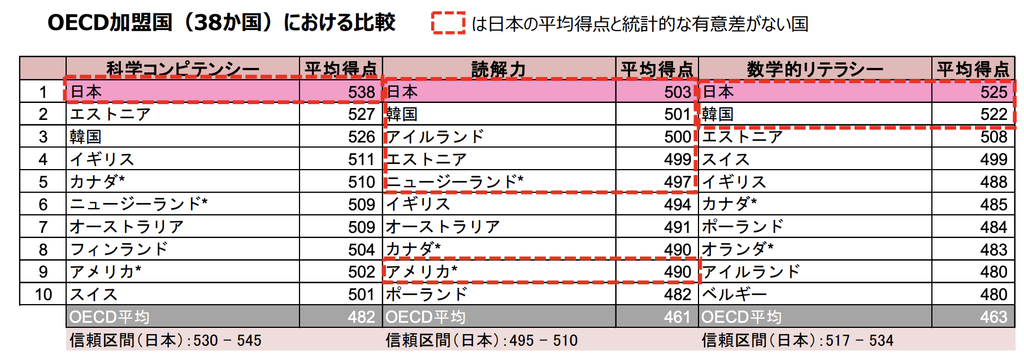
In the same survey,There were three numbers that made me stop reading.I found it. It also highlights educational challenges that only parents can address! I hope you’ll read it all the way through and discuss it as a family.
Their academic performance is high. But their interest is low.
First."I have a strong curiosity about all kinds of things.". The 15-year-old from Japan who gave that answer,62.6 percent. The OECD average is 73.5 percent.It is.
In other categories as well, the figures are below the OECD average.
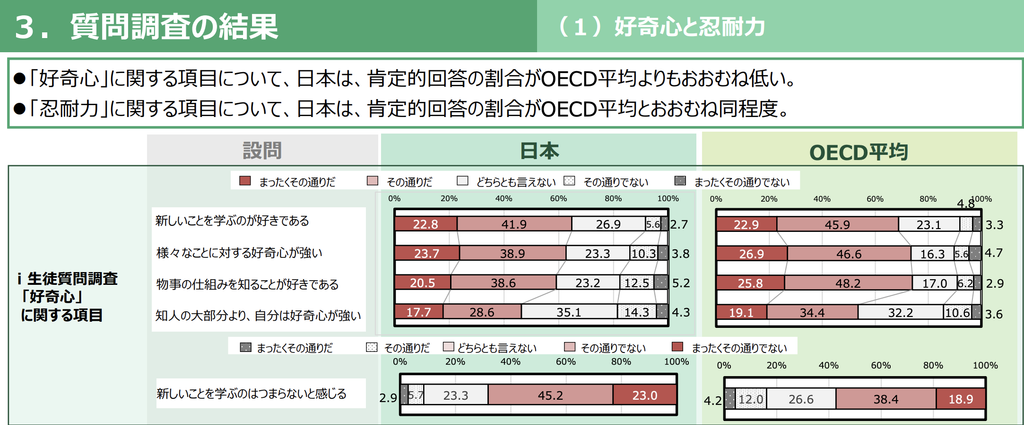
The children who are best at solving problems in the world,I'm not the person in the world who wants to "know" the most.
This indicates that their interest in various phenomena is lower than that of students in other countries.
The future I can envision from this is one where I can’t decide what to do after high school. If I go to college, I can’t find a major I’m interested in. I can already see that future unfolding.
It’s hard to sum it up in a single word, but ultimately, isn’t studying for entrance exams a major factor?
I have the ability to run. But I've never drawn a map before.
Second."Planning How to Approach Studying"The following is a list of the most common problems with theJapan's rate is 68.1 percent. The OECD average is 78.8 percent.
"When I realize things aren't going well, I change my approach"—Japan also scored 76.6 percent, falling short of the OECD average of 84.4 percent.It will be lower.
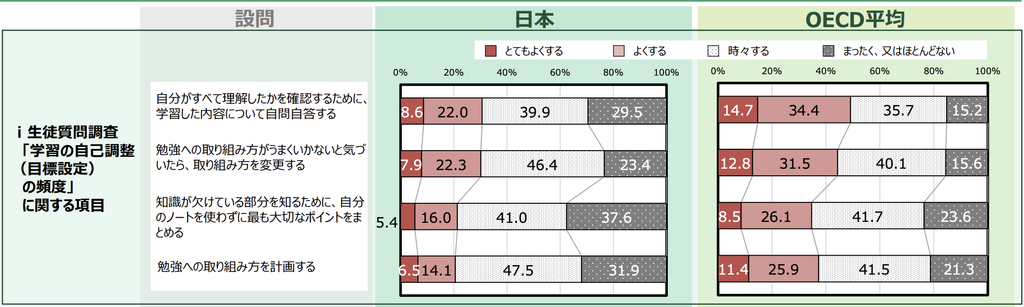
Just,"See tasks through to the end" means,In fact, it's higher than the global average.
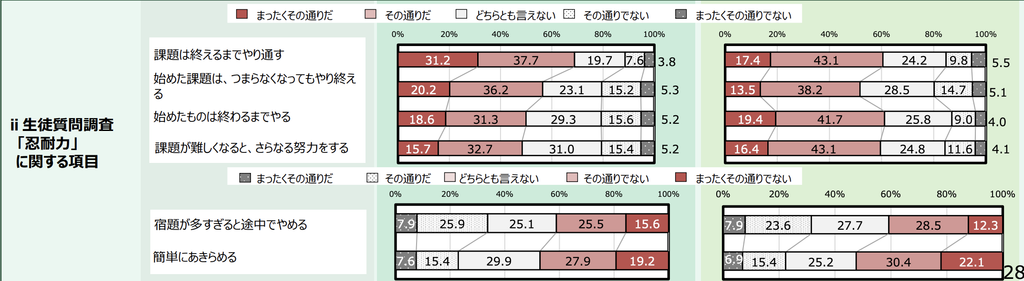
What we can say from this is that they are very diligent. However,They lack the ability to study systematically based on their own goals and objectives.That is to say.
To put it more bluntly, if I'm shown how to do it, I'll do it (I can do it), but if I'm not, I can't.
The first thing that comes to mind is"The Role of Cram Schools"Right! If you look at it the other way around, regardless of whether it's good or bad, it really shows just how big an impact cram schools have.
Schools are valued. What’s missing is conversation at home.
And third. This one really made me think the most.
Children in Japan,Supporting SchoolsThe company is doing so."I feel like I'm part of the school"—88.9 percent, exceeding the OECD average (76.2). Additionally, 93.7 percent of students disagreed with the statement "School was a waste of time." The OECD average is 76.2.It is.
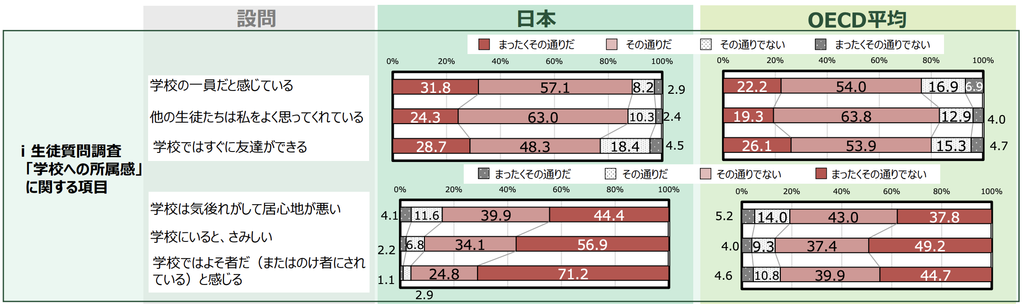
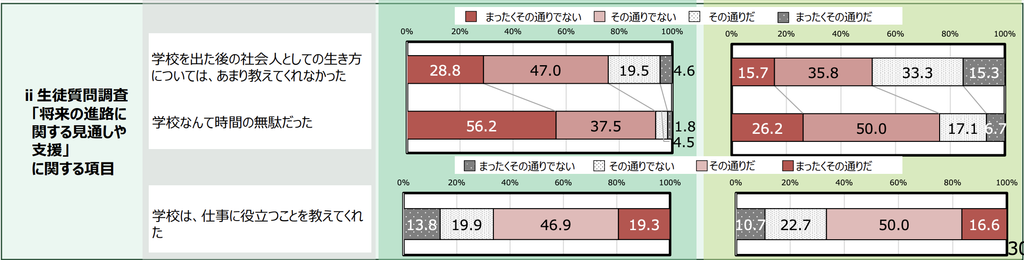
However,Frequency of Conversations About Learning at HomeHa,Lower even compared to other OECD member countriesIt is.
"What did you do at school today?" In Japan, 38.4 percent of children are asked this question every day. The OECD average is 50.7 percent.
The most negative outcome is"About the Problems You (Your Child) Are Facing at School"In response to the question of whether to speak,"Never" or "only once or twice a year" accounted for 53.8 percent.The reality is that more than half of all families do not discuss whether their children are having problems at school...can be seen.
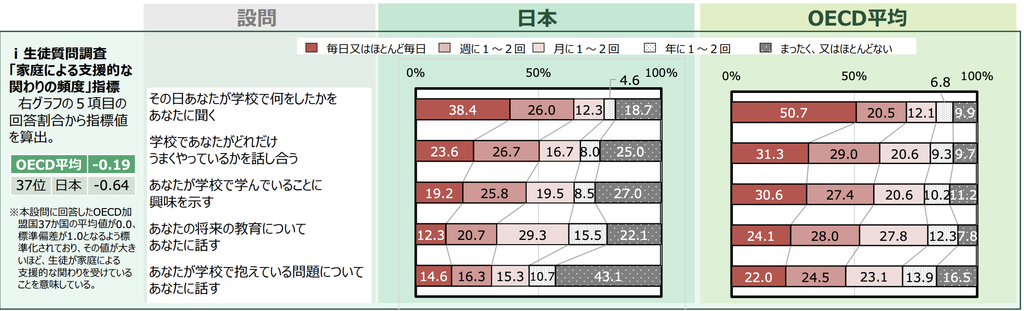
I’m not sure if it’s due to Japan’s educational culture—where children sometimes don’t notice when their parents are trying to talk to them, or where there’s a tendency to leave everything up to the school—but this seems like it could be one of the factors contributing to school refusal.
The following are some other questions to consider, so please feel free to discuss them with your family.
✔︎ Ask you (or your child) what you did at school that day
✔︎ Discuss how well you (or your child) are doing at school
✔︎ Show interest in what you (or your child) are learning at school
✔︎ Talk to you about your (i.e., your child’s) future education
✔︎ Talking to you about the problems you (or your child) are facing at school
The next step is outside of school... Today, instead of grades, "What was fun?"?"."
Lacks curiosity. Can't make plans.These two actually grow in the same place.It is.
"I wonder why," they say out loud, and then they think together about how to find out.Japanese families today have almost no time for that.
Schools are working well for children. The latest figures show that to be the case. That’s precisely why the next step might lie outside of school.
When your child comes home today, instead of asking about their grades, try asking them this:"What was the most fun thing you did today?"It's just one word. But that one word is the rarest thing in the world.
A defining feature of Japan’s education system is that it centers on preparing for entrance exams. As a result, parents tend to believe that they are fulfilling their parental duties by sending their children to cram schools and enrolling them in schools that will help them thrive.
However, whether at a cram school or a regular school, your child is just one of many. Even at a cram school that offers one-on-one instruction, if there are 100 students attending that branch, your child is just one out of 100 from the principal’s perspective. Similarly, at a school, if there are 40 students in a class, your child is just one out of 40.
However, what children are looking for is,A connection that revolves solely around you—what you think, how you feel, and what you want to doIt is.
When you think about it that way, doesn’t it become clear that Japan’s education system pays far too little attention to the students themselves?
"To adults, I'm neither one-fortieth nor one-hundredth. I am me!"It feels like I can almost hear that inner voice.
"From an adult’s perspective, this might seem like a trivial worry. But right now, it’s a huge concern for me. None of the adults seem to care about that. And I’m not just a tool for adults to boost their grades! Please don’t mistake your one-sided interests for mine."
Invitation to a Coaching Seminar
In Europe and the United States, there is a culture of parents and children talking together during meals and other occasions. However, such a culture is virtually nonexistent in Japan.
Possible reasons include both parties being busy or a lack of cultural norms surrounding dialogue in the first place. However, as I mentioned earlier,Children want their parents to listen to them.How do you feel about this?
So, why don’t parents also learn how to communicate and take the initiative to engage in dialogue?
Wednesday, September 16, 7:30 p.m. to 9:00 p.m., Online Coaching Seminarwill be held.
As the world has become more complex, today’s children face far more challenges and worries than children did during the Shōwa and Heisei eras.
Get past that and focus on your studies! There’s no way this will get the important message across to the kids.
The driving force behind motivation comes from healthy parent-child communication! Why not take the first step? To participate,Free of chargeIt is.
Details on the “Free Coaching Seminar for Parents”
[Date and time].
Wednesday, September 16, 2026, 7:30 p.m. – 9:00 p.m.
Venue
Online (Zoom)
Subject
Parents of elementary, middle, and high school students (students from other schools are also welcome to participate.)
Participation fee
free
【【[Coach Profiles]
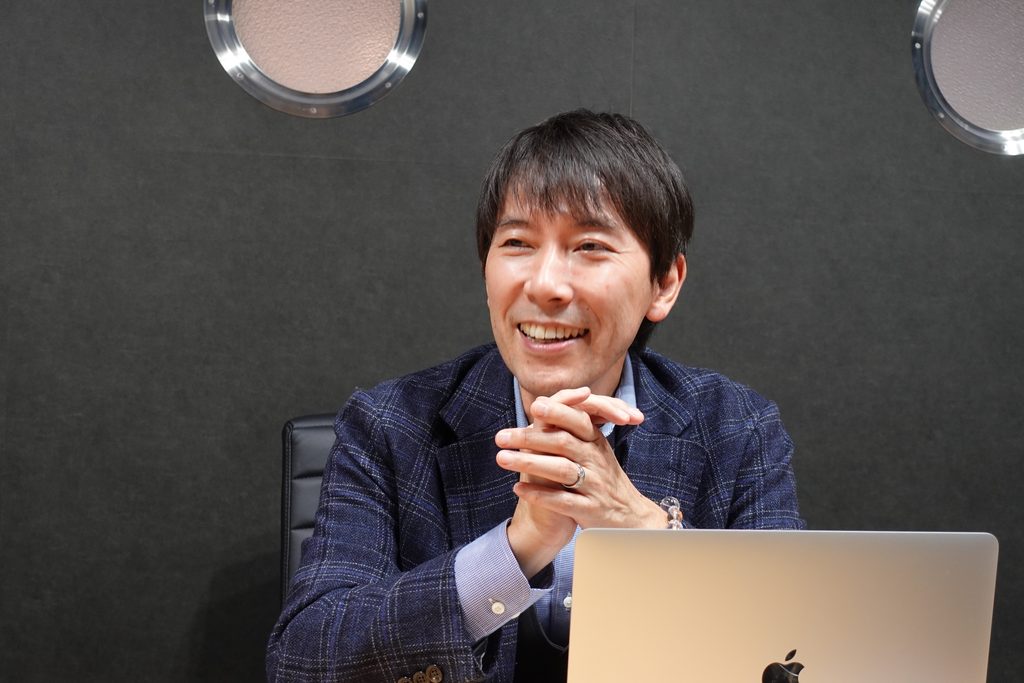
《Coach Takumi Yasui》
Takumi Yasui
Representative Director, General Incorporated Association for Question-Based Communication / Representative Director, Double Termination, Inc.
Human Resources Development Consultant and Coach. He has been engaged in management training and coaching for corporations and local governments for approximately 20 years, with a total of over 1,000 participants annually and more than 15,000 hours of coaching. Author of *The Mental Formula for Turning Team Members into Effective Assets*. He specializes in talent development that guides people who “understand something intellectually but cannot put it into action” to a state where they are fully convinced and able to take that first step on their own. Driven by the conviction that “the essence of bringing out a person’s potential is the same for adults and children alike,” he resonated with the philosophy of Kaburagi Educational Consulting and joined the MLD Project.
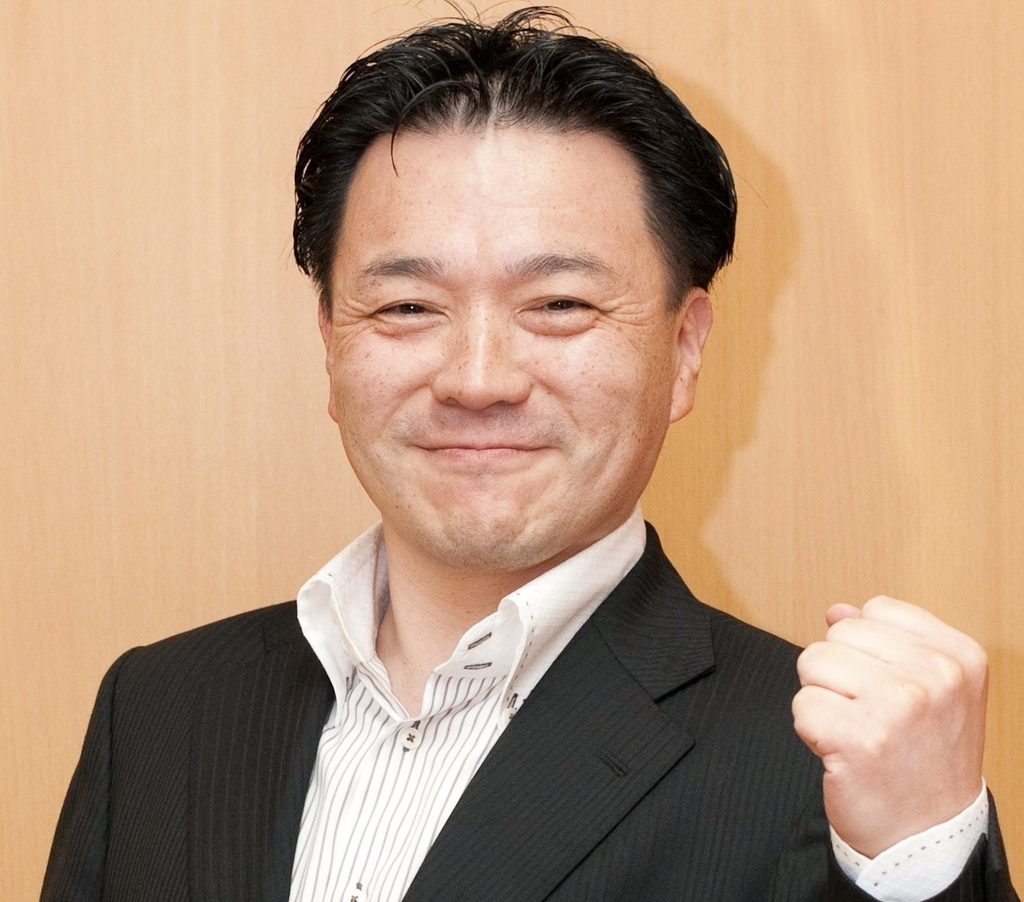
《Coach Jun Saito》
Jun Saito / Coaching Name: Jun Nishito
Financial Design, Ltd. Representative Director / Curriculum Designer and Supervisor for MLD Jr. & Teens
A graduate of Ritsumeikan University’s College of Economics. After working at a publicly traded insurance company, she became an independent financial planner, obtained a coaching certification, and has since guided a total of 500 people through their life planning over the past 20 years. She has practiced self-coaching centered on purpose and metacognition for two decades, and her three children also gained admission to national and public universities through self-exploration. Driven by the conviction that “a sense of purpose and metacognition enhance abilities regardless of field or age,” I have redesigned the adult-oriented method I’ve honed over the past 20 years into “MLD Jr. & Teens” for children.
How to apply
If you would like to participate in this seminar, please click the "GLI Official LINE" button below, and"Coaching" and the MessagePlease send us a
We will reply to your message with details about the event.
↓↓↓↓↓

We look forward to seeing parents there.
GLI Representative Kaburaki
P.S.
The New Normal in Education: Expanding Children's Potential."We provide short videos on the theme of
You can learn about the current educational situation and broaden your career path and options.Information is available.
We hope you will follow us and like our site.
GLI representative Kaburaki's installation
https://www.instagram.com/kaburaki_san
[P.S. 2
"The child expands his or her potential in what he or she loves to do, and, moreover, both parent and child are happy."
An educational community where you can "learn to educate."has started!
Kaburaki Education Salon:
https://kaburaki-educonsul.com/clp/kaburaki-salon/
What's the class atmosphere and lesson content like?"
I would like to discuss my education."
I'm not sure I'll be able to go to school overseas."
If you have such concerns or are interested in GLI
If you have any questions, please feel free to contact us.
Please come to our office for a consultation.

